Understanding Motor Protection Systems: MPCBs, Contactors, Overload Relays, and Soft Starters
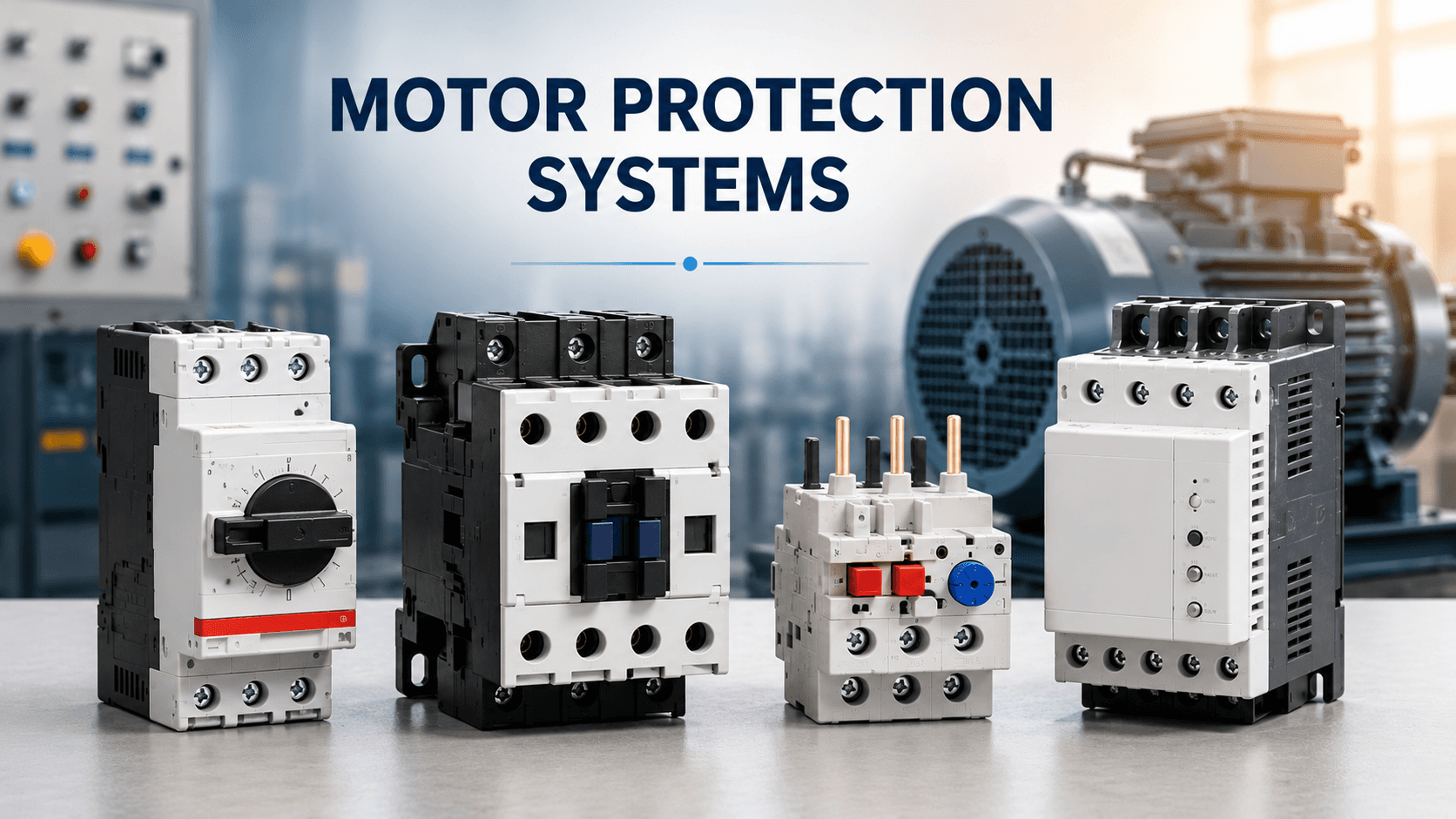
Industrial electric motors are the backbone of countless operations across manufacturing, water treatment, HVAC, mining, food processing, and commercial facilities. From driving conveyor belts and pumps to powering compressors and fans, motors are expected to operate reliably under varying load conditions. However, without an effective motor protection system, electrical faults such as overloads, short circuits, phase failures, and high starting currents can significantly reduce motor life, increase maintenance costs, and cause unexpected production downtime.
A well-designed motor control system does much more than simply start and stop a motor. It protects the motor from electrical faults, ensures safe operation, minimizes mechanical stress during startup, and allows operators to monitor and control equipment efficiently. Achieving this level of protection requires multiple components working together, each performing a specific function within the system.
Among the most essential components used in industrial motor control systems are MPCBs, contactors, overload relays, and soft starters. Depending on the application requirements, these devices may be used individually or combined to create an effective motor protection and control solution.
This guide explains the role of each component, why it is important, how they work together, and the factors to consider when selecting the right combination for your industrial application.
Motor Protection Circuit Breakers (MPCBs)
A Motor Protection Circuit Breaker (MPCB) is a specialized protective device designed specifically for electric motors. Unlike a standard miniature circuit breaker (MCB), which primarily protects electrical circuits, an MPCB is engineered to address the unique operating characteristics of motors. Electric motors draw significantly higher current during startup than during normal operation, making conventional circuit protection insufficient in many industrial applications.
An MPCB combines multiple protection functions into a single compact device. It safeguards motors against overloads and short circuits, and many models also provide protection against phase failures. while also serving as a manual disconnect switch for maintenance and operational control. This combination reduces the number of individual components required in a motor control panel, simplifying installation and improving overall system reliability.
Why Are MPCBs Important?
Electric motors are among the most valuable assets in industrial facilities. Even a brief electrical fault can result in production losses, expensive repairs, or complete motor replacement. An MPCB continuously protects the motor circuit by responding to unsafe electrical conditions such as overloads, short circuits, and, where supported, phase failures, disconnecting the supply when required.
The key benefits of using an MPCB include:
Protects motors from overload conditions that generate excessive heat.
· Rapidly interrupts short-circuit currents to reduce the risk of equipment damage.
· Many MPCBs incorporate phase-loss sensitivity, helping protect motors against single-phasing and reducing the risk of winding damage.
Functions as a manual switching device for safe maintenance.
Improves operational safety and minimizes equipment downtime.
Because the protection settings can often be adjusted to match the motor's rated current, an MPCB provides far more accurate protection than a standard circuit breaker.
Typical Applications
Motor Protection Circuit Breakers are widely used in applications where reliable motor protection is essential, including:
Industrial control panels
Motor control centers (MCCs)
Pumping systems
HVAC installations
Conveyor systems
Compressors
Fans and blowers
Packaging machinery
Material handling equipment
Manufacturing plants
For example, in a conveyor system, an MPCB protects the motor against overloads caused by jammed belts while also isolating the motor during maintenance. This helps prevent costly damage and improves operator safety.
Power Contactors
A Power Contactor is an electrically operated switching device used to control the supply of electrical power to motors and other high-current equipment. Unlike an MPCB, a contactor is not designed to provide overload or short-circuit protection. Instead, its primary purpose is to safely switch electrical loads on and off using a low-voltage control signal.
Modern industrial facilities rely heavily on automation, making manual switching impractical for many applications. Contactors enable motors to be controlled remotely from push buttons, programmable logic controllers (PLCs), timers, sensors, or building management systems. This not only improves operational efficiency but also enhances workplace safety by reducing direct interaction with high-voltage equipment.
Internally, a contactor consists of an electromagnetic coil and a set of power contacts. When the control circuit energizes the coil, the contacts close, allowing current to flow to the motor. When the control signal is removed, the contacts open and disconnect the motor from the power supply.
Why Are Contactors Important?
Power contactors play a central role in motor control systems because they provide reliable switching for frequent motor operations without causing excessive wear.
Their advantages include:
Enables remote and automatic motor control.
Safely switches high-current electrical loads.
Integrates easily with PLCs, timers, and automation systems.
Reduces wear associated with manual switching devices.
Supports interlocking and safety control circuits.
Improves operational flexibility in industrial environments.
Since contactors are designed for repeated switching operations under defined utilization categories, they provide reliable service life in industrial motor applications.
Types of Contactors
Several types of contactors are available depending on the application requirements:
Three-Pole Contactors
Four-Pole Contactors
Auxiliary Contactors
Capacitor Duty Contactors
AC Contactors
DC Contactors
Each type is designed to accommodate different electrical loads, switching frequencies, and control requirements.
Typical Applications
Power contactors are commonly used in:
Motor starters
Industrial automation systems
HVAC equipment
Compressors
Pumping stations
Material handling systems
Lighting control systems
Water treatment plants
For instance, in a pumping station, the control panel sends a low-voltage signal to energize the contactor whenever the water level reaches a preset value. The contactor then connects the motor to the power supply while the protective devices continue monitoring system conditions.
Overload Relays
While motors occasionally experience brief periods of high current during startup, prolonged overcurrent can generate excessive heat that gradually damages insulation, bearings, and windings. An overload relay is designed to detect sustained overload conditions and trip the motor starter control circuit. This causes the contactor to disconnect power from the motor, preventing overheating and damage.
Unlike short-circuit protection devices that respond almost instantaneously, overload relays monitor the current flowing through the motor over time. If the motor operates beyond its rated current for an extended period, the relay trips the control circuit, de-energizing the contactor and stopping the motor safely.
Although MPCBs provide overload protection, overload relays are still widely used in motor starter assemblies where coordinated protection, remote reset, or additional motor monitoring is required.
Why Are Overload Relays Important?
Continuous motor overload can significantly shorten equipment life. Overload relays help prevent these conditions before they result in costly failures.
Their primary benefits include:
Protect motors from overheating.
Prevent insulation deterioration caused by excessive current.
Extend motor service life.
Reduce maintenance and repair costs.
Improve equipment reliability and operational continuity.
By responding to sustained overload conditions rather than temporary starting currents, overload relays provide effective protection without unnecessary interruptions during normal motor startup.
Types of Overload Relays
Thermal Overload Relays
Thermal overload relays use bimetallic strips that bend when heated by excessive current. When the strip reaches a predetermined temperature, the relay trips its control contacts, causing the contactor to disconnect power from the motor.
These relays are widely used because of their simplicity, reliability, and cost-effectiveness.
Electronic Overload Relays
Electronic overload relays monitor motor current using electronic sensors and microprocessor-based circuitry. They offer higher accuracy, adjustable protection settings, phase-loss detection, and additional monitoring features suitable for modern industrial automation.
Typical Applications
Overload relays are commonly installed in:
Direct-On-Line (DOL) starters
Star-Delta starters
Motor control centers
Pump systems
Compressors
Fans and blowers
Conveyor systems
Manufacturing equipment
As an example, if a conveyor belt becomes overloaded due to excessive material buildup, the motor begins drawing higher current. The overload relay detects this condition and trips the starter control circuit, causing the contactor to disconnect the motor before overheating causes permanent damage.
Soft Starters
Many induction motors can draw approximately six to eight times their rated current during direct-on-line starting. This sudden inrush current places considerable stress on both the electrical network and the mechanical components connected to the motor.
A Soft Starter minimizes these effects by gradually increasing the voltage supplied to the motor during startup. Instead of accelerating instantly to full speed, the motor starts smoothly, reducing electrical disturbances and mechanical shock.
While the primary function of a soft starter is controlled motor acceleration, many modern models also incorporate advanced motor protection features. Soft starters improve motor starting performance and help extend the lifespan of both the motor and the driven equipment.
Why Are Soft Starters Important?
Soft starters provide several operational and maintenance benefits, particularly in applications involving large motors or high-inertia loads.
Key advantages include:
Reduces high starting current.
Minimizes mechanical stress on shafts, gears, and belts.
Extends equipment service life.
Reduces voltage dips within the electrical system.
Improves overall power quality.
Lowers maintenance requirements.
By providing smooth acceleration, soft starters also reduce water hammer effects in pumping systems and decrease wear on conveyor mechanisms.
Typical Applications
Soft starters are commonly used for:
Large centrifugal pumps
Industrial fans
Air compressors
Crushers
Conveyors
HVAC systems
Blowers
Material handling equipment
Water treatment facilities
For example, in a water treatment plant, gradually accelerating a pump motor prevents sudden pressure surges that could damage pipelines and valves while reducing stress on the motor itself.
How These Components Work Together
Although each component performs a different function, they operate together as part of an integrated motor control system.
Step 1 – Protection
In a typical motor starter, the electrical supply first passes through the Motor Protection Circuit Breaker, which protects against overloads, short circuits, and, where supported, phase failures. If an unsafe condition occurs, the MPCB immediately disconnects the motor from the power supply.
Step 2 – Switching
When the operator presses the start button or an automation system issues a command, the Power Contactor energizes and connects the motor to the electrical supply. The contactor acts as the primary switching device during normal operation.
Step 3 – Controlled Starting
Where installed, the Soft Starter gradually increases the voltage delivered to the motor. This controlled acceleration significantly reduces starting current and minimizes mechanical stress on connected equipment.
Step 4 – Continuous Monitoring
Where an overload relay is installed, it continuously monitors the motor current during operation. If sustained overload conditions occur, it trips the contactor control circuit, causing the contactor to disconnect power from the motor before overheating causes damage.
By combining protection, switching, monitoring, and controlled starting, these four components create a motor control system that improves equipment reliability, enhances workplace safety, and reduces unplanned downtime.
How to Choose the Right Combination
Selecting the appropriate motor protection system requires careful consideration of the operating conditions and application requirements.
Motor Rating
Always match protective devices to the motor's voltage, horsepower, and full-load current. Incorrect sizing can lead to nuisance tripping or insufficient protection.
Starting Method
Smaller motors often operate efficiently using an MPCB and contactor. Larger motors or applications requiring reduced starting current may benefit from the addition of a soft starter.
Load Characteristics
Motors driving heavy loads such as crushers, conveyors, compressors, and pumps may require enhanced protection and controlled acceleration to minimize mechanical stress.
Environmental Conditions
Ambient temperature, humidity, dust, vibration, and enclosure requirements all influence component selection and long-term reliability.
Compliance Requirements
Ensure all motor control components comply with applicable IEC or local electrical standards to achieve safe operation and regulatory compliance.
Choosing the correct combination of components not only improves motor performance but also reduces maintenance costs, extends equipment life, and enhances overall system efficiency.
Conclusion
Effective motor protection depends on the coordinated operation of multiple components rather than a single protective device. Motor Protection Circuit Breakers (MPCBs), Power Contactors, Overload Relays, and Soft Starters each perform a distinct function that contributes to the safe, efficient, and reliable operation of industrial motors.
The MPCB safeguards the motor against electrical faults, the contactor provides dependable switching, the overload relay protects against sustained overcurrent conditions, and the soft starter ensures smooth acceleration by reducing electrical and mechanical stress during startup. Together, these components create a comprehensive motor control system capable of supporting a wide range of industrial applications.
Whether used in manufacturing facilities, HVAC systems, water treatment plants, or material handling equipment, selecting the right combination of motor protection and control devices is essential for maximizing equipment reliability, reducing downtime, and ensuring long-term operational performance.